Empty desert highway stretching toward horizon at golden hour, sensor-equipped autonomous test vehicles visible as specks in the distance
◆ LATEST DISPATCH

The Road Is Reading
You Back

Every lidar pulse that leaves a spinning turret returns with a question the engineers never fully anticipated: what does the machine actually understand about the driver it just replaced? Somewhere between the occupancy grid and the motion planner, a new kind of perception is being assembled — one that reads lane markings the way a cartographer reads coastlines, and treats a hesitating pedestrian as a probability distribution rather than a person.

Read the Latest Dispatch

Written by

Mira Okonkwo

Senior Technology Correspondent

Reading time

14 min

DISPATCHES
Issue 01 · February 2026
Perception Stack01

What the Machine Sees at Midnight

Inside the sensor fusion pipeline that keeps a robotaxi oriented during a Category 1 rainstorm

At 11:47 PM on a wet Tuesday in Phoenix, the vehicle's front-facing cameras were functionally blind. Rain on the lens, sodium vapor halation from the overpass, a truck's brake lights smearing into abstract expressionism across the wet asphalt. The lidar was doing its job — returning 1.3 million points per second, constructing a faithful occupancy grid of the world — but the neural network responsible for reading lane markings had been trained on 40 million frames of dry California highway, and this was not California, and this was not dry.

What happened next is the reason Waypoint exists: the vehicle didn't stop. It didn't call for remote assistance. It fused the degraded camera signal with radar returns and the high-definition map's stored lane geometry, assigned confidence weights that the camera team would later describe as "embarrassingly low," and proceeded through the intersection at a speed its motion planner had calculated as appropriate for a situation it could not fully see. The passenger — a policy researcher from ASU, in the back seat with a laptop and a half-finished grant proposal — noticed nothing.

Continue Reading
PV

Priya Venkataraman

Embedded Systems Correspondent · 18 min read
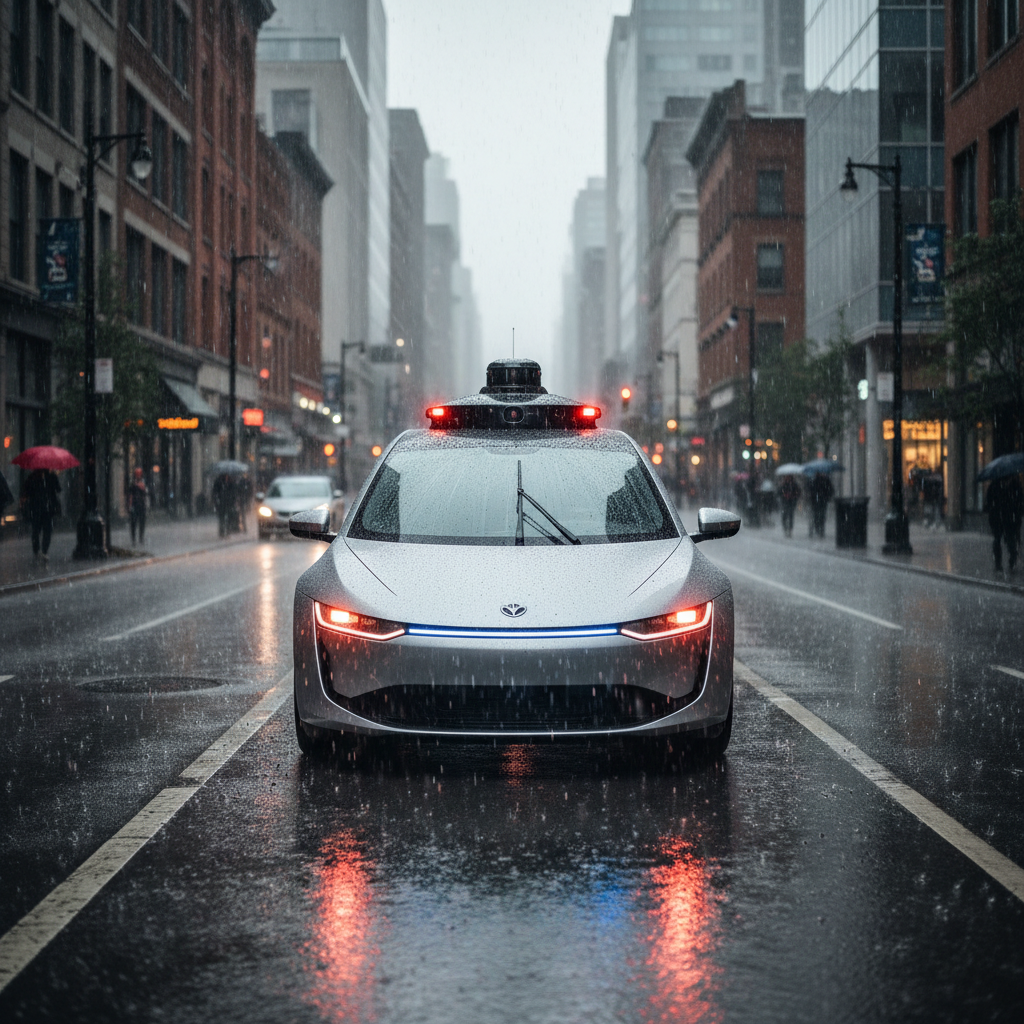
Close-up of autonomous vehicle sensor array and lidar unit mounted on test vehicle roof in low light

Velodyne HDL-64E unit, mid-scan cycle. Phoenix test corridor, Jan 2026.

lidar returns / second

1.3M

HDL-64E at 10 Hz rotation. Rain: −40% effective range.
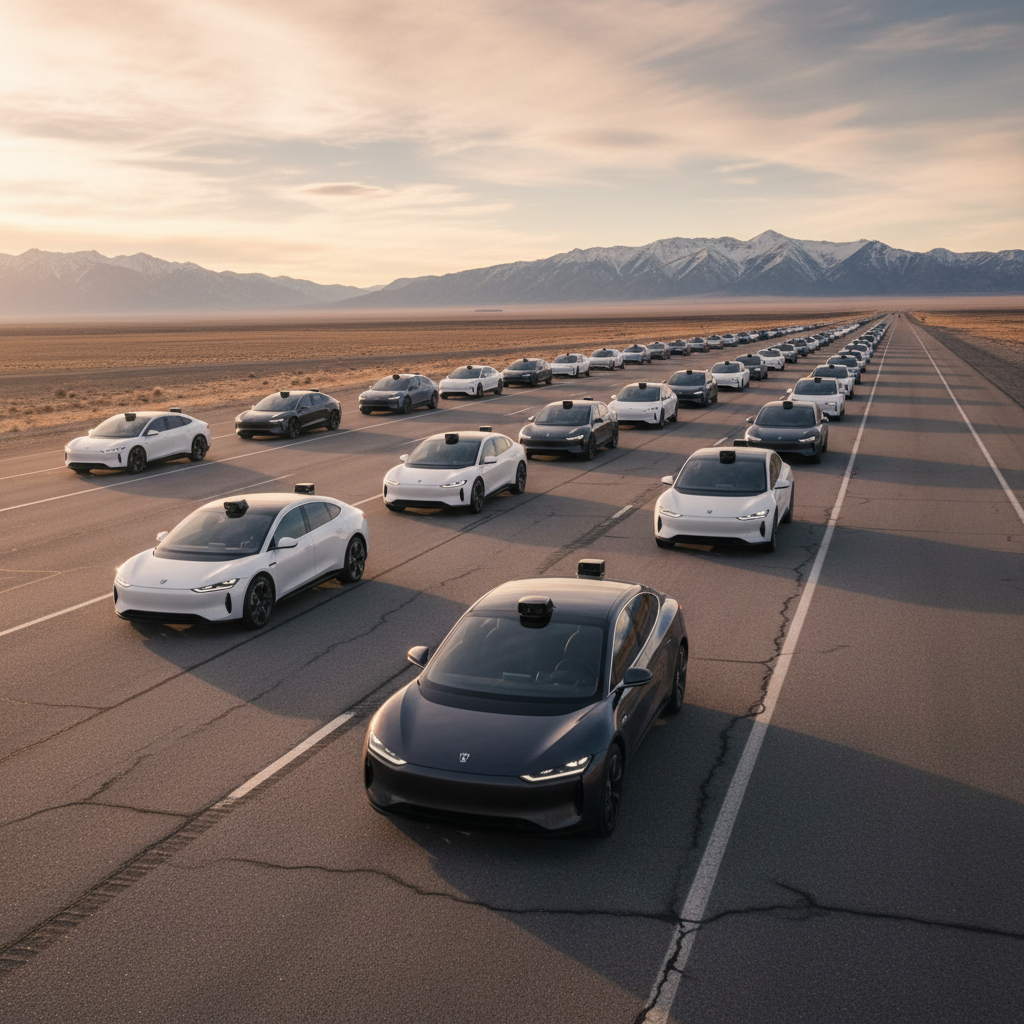
Wide shot of autonomous vehicle test fleet on empty highway at dusk, mountains visible in background

Waymo test fleet, I-280 corridor, January 2026. Photo: David Lim / Waypoint

Municipal Policy02

The Permit That Rewrote the Intersection

How one San Francisco variance created a legal template now being copied in seven states

The document was 340 pages long and took eleven months to produce, and when the San Francisco Municipal Transportation Agency finally approved Waymo's expanded commercial permit in September 2025, the most consequential paragraph was on page 217, buried in an appendix titled "Behavioral Expectations at Uncontrolled Intersections." The language was dry, as regulatory language tends to be, but what it authorized was genuinely new: an autonomous vehicle could, in specific conditions, proceed through an intersection without coming to a complete stop, provided its sensor suite had established — to a statistical confidence threshold the document specified to four decimal places — that no conflicting traffic existed within a 40-meter radius.

Lawyers in Austin read it overnight. Transportation engineers in Columbus scheduled calls. A lobbyist in Lansing forwarded it to the state's autonomous vehicle working group with a single line of commentary: "This is the template." She was right. By January 2026, four states had adopted near-identical language.

Continue Reading
TH

Tobias Henriksen

Policy & Regulation Desk · 11 min read

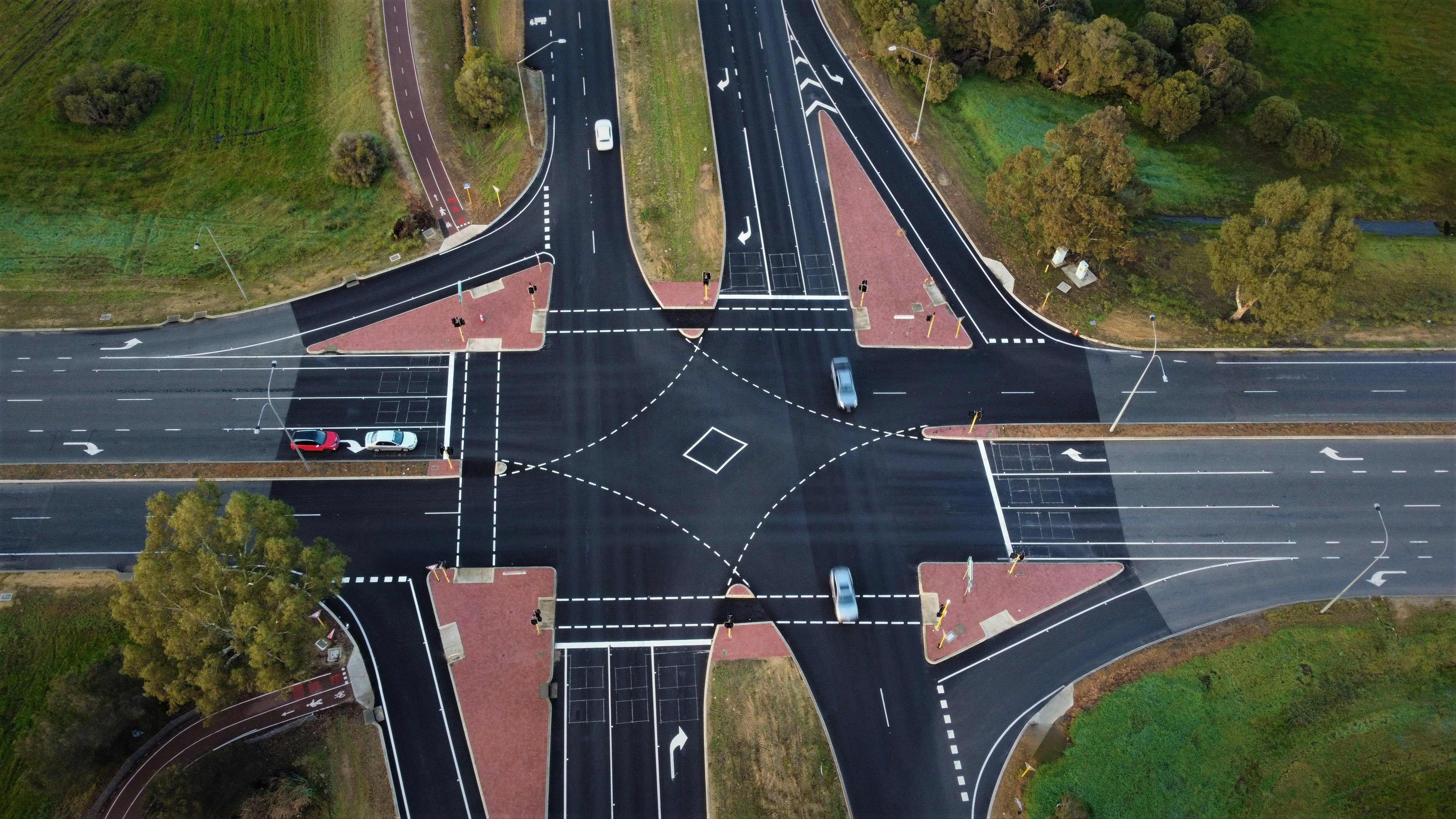
Aerial view of urban intersection with road markings and traffic light infrastructure from above

Market St. & Van Ness Ave., SF. The intersection named in the variance.

States adopting SF permit language

CA
TX
OH
MI
AZ
WA
FL

◆ FROM THE FIELD

"Somewhere between the occupancy grid and the motion planner, a new kind of perception is being assembled — one that reads lane markings the way a cartographer reads coastlines."
— Mira Okonkwo, "The Road Is Reading You Back"
First Ride03

Thirty-Seven Minutes Without a Driver

A first-person account of the cognitive vertigo that arrives about eight minutes into a driverless ride

The car arrived exactly on time, which felt important to notice. I had been told to sit in any seat, which I interpreted as an invitation and also a small test of my own comfort with ambiguity. I chose the back left — a position I'd never occupied in a taxi without a stranger in front of me — and felt immediately that I had made a category error, that the seat I had chosen was designed for a passenger accompanying someone, not for a passenger alone.

The first eight minutes were fine. The car drove competently through the Mission, stopped correctly at lights, yielded to a cyclist with what I can only describe as appropriate caution. I watched the in-app display show me what the vehicle was seeing: pedestrian icons blooming and fading, lane lines traced in confident blue. Then we entered the freeway on-ramp, and the car accelerated to 67 miles per hour in a way that felt — I am trying to be precise here — not aggressive, not smooth exactly, but algorithmic. The acceleration had no opinion about itself.

Continue Reading
CO

Camille Osei-Bonsu

Contributing Editor · 9 min read

◆ FIELD NOTES

Subscribe to the Field Notes

Dispatches every two weeks. No noise — just the three most important developments in autonomous systems, with commentary from our desk.

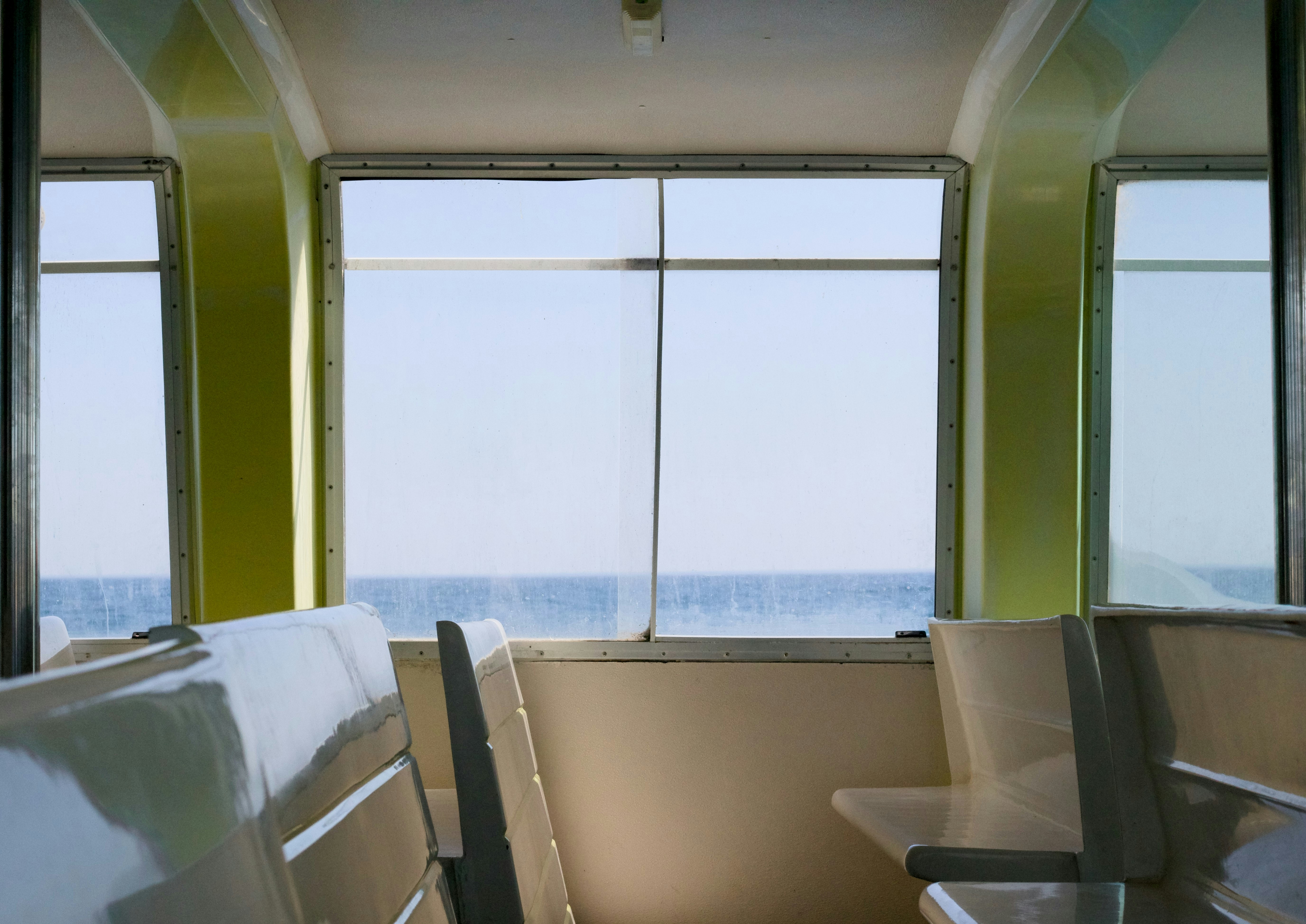
Interior view of autonomous vehicle rear seat with empty front seat and road ahead visible through windshield

Waymo One, Mission District to SFO. The empty front seat.

"The acceleration had no opinion about itself."

— Camille Osei-Bonsu, Waypoint Vol. 01

◆ NEW DISPATCH AVAILABLE

Read the Latest Dispatch

This week: the Phoenix incident that nobody reported, a new federal framework that changes everything for Level 4 deployment, and why the industry's confidence metrics are measuring the wrong thing entirely.

Read the Full Dispatch

ISSUE 01 · FEBRUARY 2026

3 features · 42 min total reading time

THE DESK
4 contributors · 41 dispatches
Portrait of Mira Okonkwo, technology correspondent, in natural light

Mira Okonkwo

Senior Technology Correspondent

Former perception engineer at Cruise. Writes about the gap between what autonomous systems can do and what their makers claim.

12 dispatches

Portrait of Tobias Henriksen, policy correspondent, in natural light

Tobias Henriksen

Policy & Regulation Desk

Covered NHTSA for seven years. Now tracks the regulatory frameworks being drafted in real time as the technology outpaces the law.

8 dispatches

Portrait of Priya Venkataraman, embedded systems correspondent, in natural light

Priya Venkataraman

Embedded Systems Correspondent

PhD in robotics from CMU. Translates the stack — from sensor fusion to behavioral prediction — for readers who need to understand it, not just be impressed by it.

15 dispatches

Portrait of Camille Osei-Bonsu, contributing editor, in natural light

Camille Osei-Bonsu

Contributing Editor

Writes the dispatches that remind engineers why any of this matters. Her first-person coverage of early robotaxi rides has become the publication's most-shared work.

6 dispatches

41

Dispatches Published

18K

Field Notes Subscribers

94%

Engineer Readership

Feb 2025

First Issue